The PROOF is in the SOIL - Weed Prevention
How exactly do weed preventatives (pre-emergent herbicides) work?
I feel like a lot of people assume the "stuff" we spray on the grass, works by being absorbed into the grass it self, but really, nothing we spray as part of the core program works by being absorbed by or by touching the grass at all, It works in the SOIL and to get there it MUST be watered off the grass and down into the soil.
I also hear the statement that “pre-emergents prevent weed seeds from germinating” This is a false statement, because pre-emergents do not work unless the weed seeds have germinated. Weed seeds can lay dormant in the soil for years until the conditions are correct for them to germinate. So, if they do not prevent the seeds from germinating how do they work?
|
Grassy weeds (annuals and perennials) germinate at different times and under different environmental conditions. The three main annual grassy weeds that are prominent in turfgrass in the Spring/Summer are; crabgrass, foxtail, and goosegrass. There are others, and these main three also may have different varieties within each species. Other grassy weeds like Poa annua germinate in the fall. Of these, crabgrass is the first to germinate followed by foxtail and then goosegrass. Crabgrass needs a soil temperature of 55°F for about 5 days to start the germination process. Soil moisture needs to be adequate, and for crabgrass sunlight is necessary. Foxtail germinates next at slightly warmer soil temps, still needs the soil moisture, but will germinate in shade as well as open sun. Goosegrass germinates about a month later, due to warmer soil temps are needed, but also does not require sunlight to germinate. |
- Crabgrass needs a soil temperature of 55°F for about 5 days to start the germination process - |
Soil Temperature. NOT Air Temperature
|
People like to use flowering plants to go by to determine when to have their pre-emergent down. This idea can give you a general time frame, but flower bud development is governed by air temperature and not soil temperature. |
Weed Seeds HAVE to Germinate
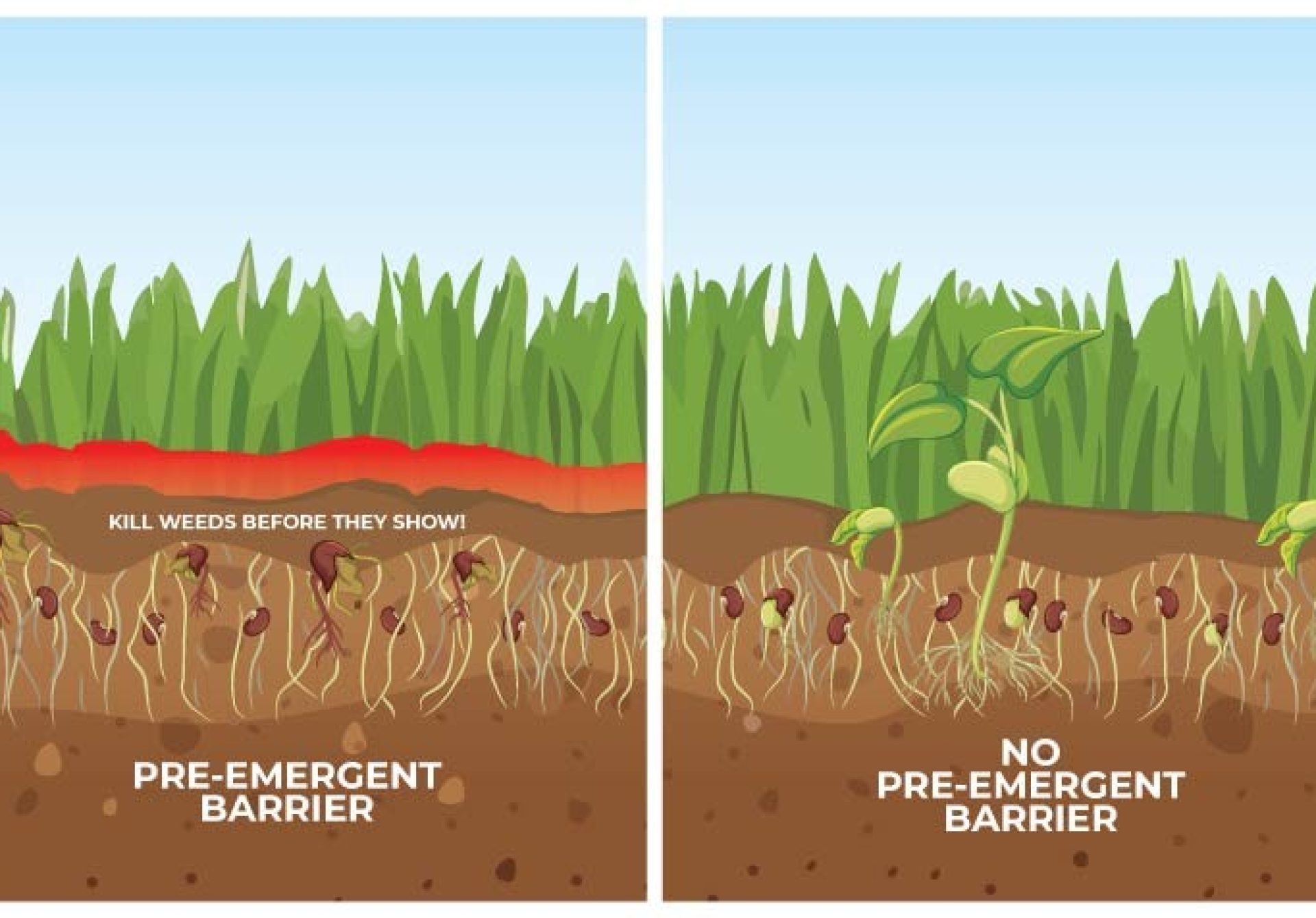
So, if pre-emergents do not prevent weed seeds from germinating, how to they prevent grassy and broadleaf weeds from invading our turf? To be correct, you want the weed seeds to germinate. Once a seed germinates, the initial or primary root emerges from the seed. At this point, if a pre-emergent has been applied, when the young root absorbs moisture from the soil, the pre-emergent does its job. Depending on the specific active that is contained in the pre-emergent, the root or initial leaf is prevented from developing and that plant dies. All of this activity occurs below the turf canopy and is never seen. This is probably the reason that people state that the seeds are prevented from germinating. Pre-emergents are chemicals that are highly un-soluble. This is important because you want the ingredient to remain at or very near the soil surface because this is where the majority of the weed seeds are and where they germinate. To make a proper application, you should have the pre-emergent applied weeks before the weed seed germinates. This allows time for the pre-emergent to form a barrier across the soil surface. It is better to go early vs. late when applying your pre-emergent. Pre-emergents are mainly broken down by soil microbes and in thin or bare areas they broken down by UV rays.
IMPORTANT NOTE: I hear people say all the time "why do I have weeds, I used pre-emergents". NOT ALL WEEDS ARE PREVENTABLE. There are numerous weeds that cant be prevented. Onions and Sedges (nutsedge) grow from tubers, not seeds, making pre-emergents useless against them. Also, some weeds are perennial, if that weed was there last year and it wasn't completely killed - its coming back next year, regardless of pre-emergents. There are resistant weeds, Spurge and Goosegrass can be very difficult to prevent completely. Virginia button weed is also a unique weed that can be difficult to "prevent'.
The 2 Types of Pre-Emergents we use
1. Turf Pre-Emergents (For Grass)
Turf pre-emergents are applied to established lawns and are especially effective against annual grassy weeds like crabgrass, goosegrass, foxtail, and certain broadleaf weeds. These products are typically applied before spring, before soil temperatures begin to rise and weeds start to germinate.
A well-timed application is critical. Turf pre-emergents are safe for established lawns but should not be applied to areas where you plan to seed new grass, as they can also prevent grass seed from germinating.
2. Landscape Bed Pre-Emergents
Landscape beds are especially vulnerable to weed invasions, as open mulch and soil create ideal conditions for weed seeds to settle and grow. Landscape pre-emergents are designed to prevent common weeds like spurge, chickweed, clover, and oxalis from germinating in your beds. We apply these pre-emergents twice a year. While they won’t affect existing plants or flowers, they do need to be applied with care, especially around young or newly transplanted ornamentals.
The Key to Effective Weed Control
The success of pre-emergents lies in timing and consistency. Both turf and landscape pre-emergents should be applied before weed seeds begin to germinate. This often means before spring and early fall. Once applied, it’s imperative to water the area lightly to activate the product and ensure it penetrates the soil.
At Turf Worx+, we offer professional pre-emergent treatments for your lawn and landscape beds. We know exactly when and how to apply them for maximum effectiveness, helping you enjoy a weed-free yard all season long.
Ready to stop weeds before they start? Contact us today!